From Sacred Music to Legal Records: Conserving the Many Lives of a Manuscript
From Sacred Music to Legal Records: Conserving the Many Lives of a Manuscript
by Hoa Perriguey
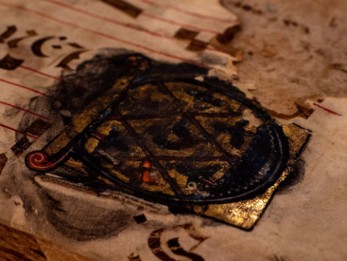
Fig. 1: Detail of the illuminated initial on the front cover before treatment
At first glance, a seventeenth-century notarial register might seem little more than a record of legal transactions. This 1647 register, drawn up by Notary Tommaso Agius, however, has a much richer story to tell. The parchment that now wraps this notarial register was not made specifically for it but was originally a leaf of an earlier choir book, where it had already lived a very different life.
This register is just one example of the many volumes preserved at the Notarial Registers Archive (NRA), each with the potential to reveal something that extends beyond the legal purpose for which it was produced.[1] Conserving such manuscripts always presents a challenge; every intervention must balance the need to stabilise the volume so that it can be handled safely and studied, while also preserving the material evidence that makes it historically significant.
The Fate of a Choir Book
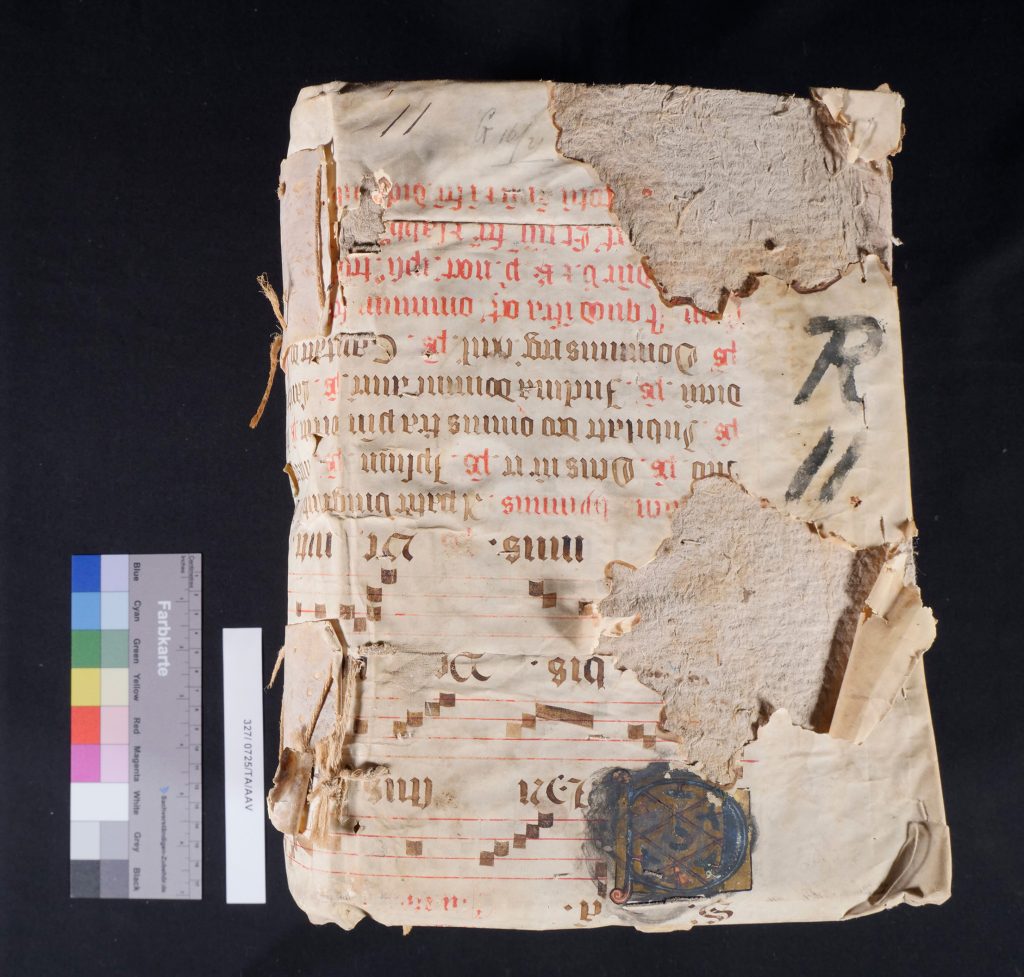
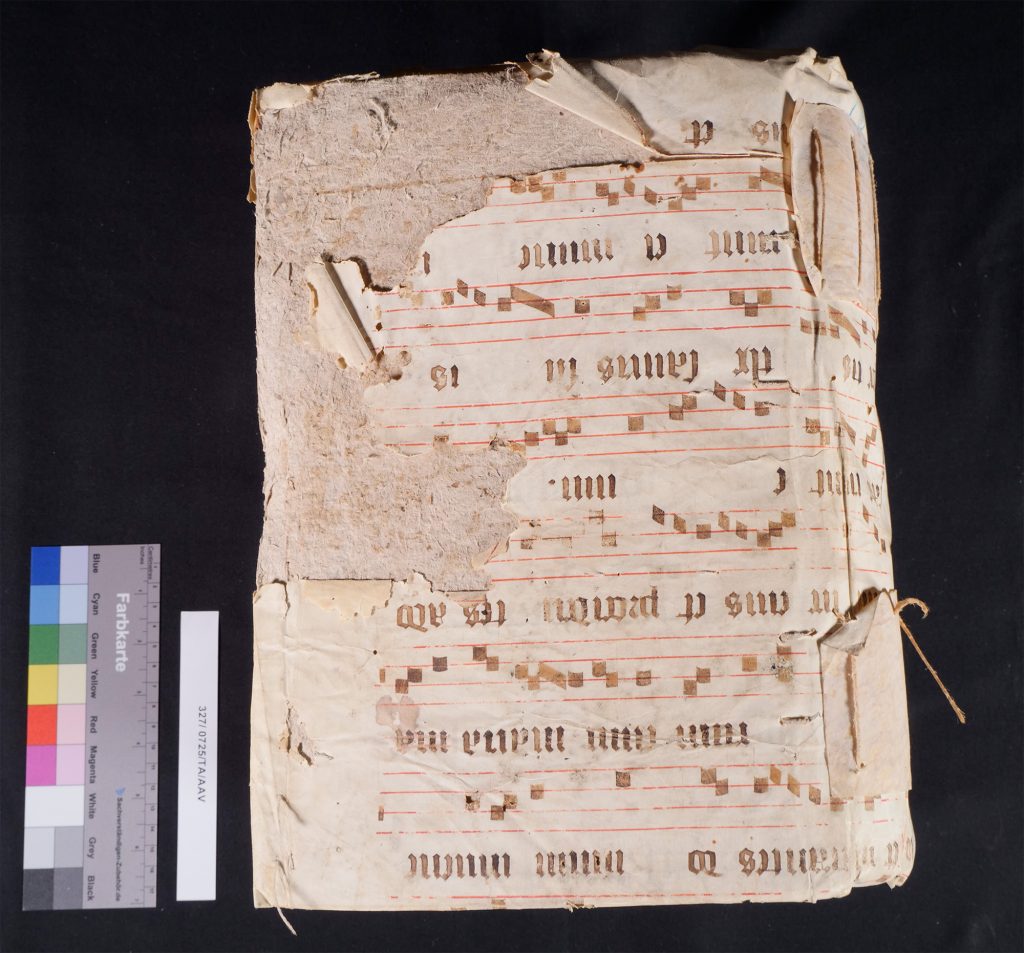
Fig. 2: front and back covers before treatment
This kind of reuse was not unusual. Parchment was a highly valuable material, as were the gold leaf and pigments used to decorate medieval and early modern manuscripts. When manuscripts were no longer needed, their materials were often repurposed rather than discarded, both to reduce costs and because materials were too valuable to waste. There is a certain irony in this: today recycling helps us manage the consequences of our excess, whereas in the past it was driven by scarcity.
What may have once been a purely practical decision is now a remarkable asset, precisely because it preserves traces of the original manuscript while providing valuable insights into the people, materials and circumstances that shaped both the original choir book and the register it eventually came to bind.
But what circumstances could lead to a choir book being dismantled and its leaves reused?
The reuse of leaves from antiphonaries is likely linked to liturgical reforms, which led to the removal of amended musical sections from manuscripts.[2] This kind of reuse is separate from the broader and well-documented recycling of medieval manuscripts, which followed the rise of Protestantism.[3]
One such example appears on the cover of Agius’ register, where a verse from Psalm 94, used in the Epiphany Matins, can still be identified (cf. fig. 2). Notably, the binding is made of a complete bifolio, whereas most reused material more commonly survives in fragmentary form.[4] Interestingly, the bifolio has been mounted upside down, likely to display a gold illuminated initial prominently on the front cover (cf. fig. 1, 2). Its central fold has been aligned with the spine, integrating the manuscript page neatly into the book’s structure.
Despite these insights, the object still holds many mysteries. Where was this choir book originally produced? How did it make its way to Malta? And who owned it before it was taken apart?
The Life of a Register
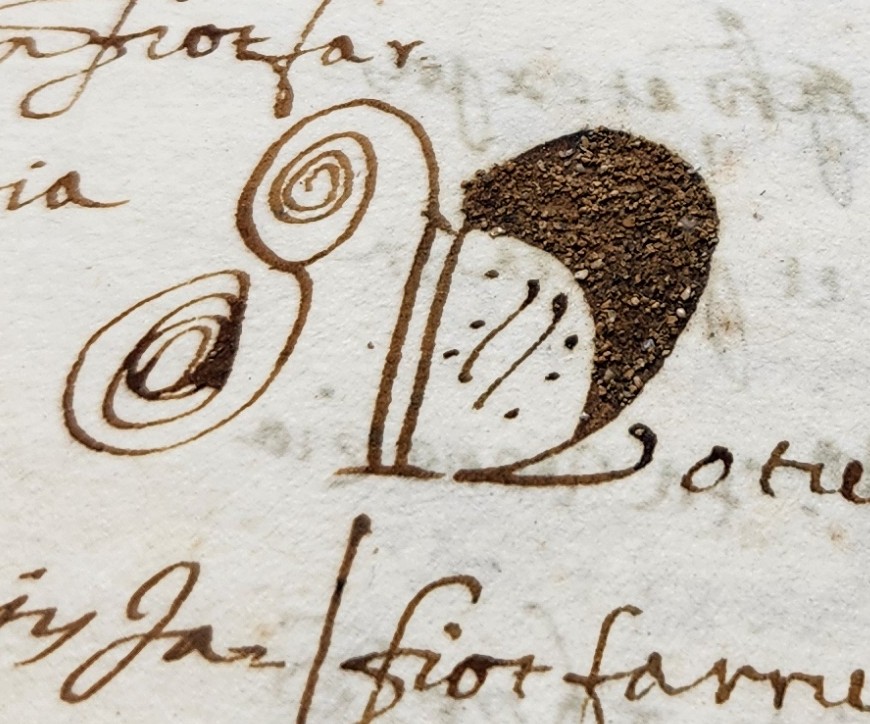
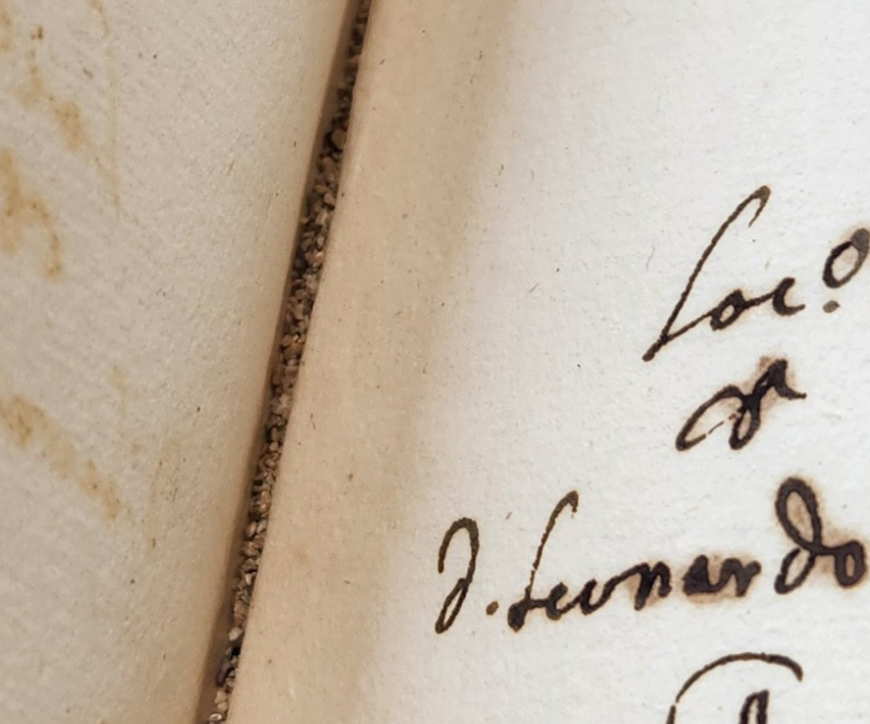
Fig. 3: Detail of blotting sand still present on the ink and inside the gutter
Beyond the recycled parchment cover, the textblock has its own story to tell. Like many seventeenth-century documents, the register was written in iron gall ink. Although prized for its indelibility over carbon black ink, iron gall ink could become corrosive over time. In this manuscript, the first 370 pages had suffered severe damage, with the paper support gradually breaking down as the ink oxidised. The decorated initials were particularly affected, as the heavier application of ink further weakened the paper. To stabilise these fragile areas, a very thin Japanese tissue (3.6 g/m²) was applied to one or both sides of the affected pages using a 5% solution of Klucel G in ethanol.
The examination of the textblock also revealed tiny grains of blotting sand still preserved in the gutters and, in some cases, adhered to the surface of the ink (cf. figs. 3 and 4). Sprinkled onto the freshly written text more than three centuries ago to accelerate drying, these grains have survived remarkably well.
Recent studies highlight the importance of preserving and analysing blotting sand, which was widely used in the Western world between the fifteenth and nineteenth centuries.[5] Although the term “sand” refers to grain size, its composition may be mineral, metallic, or organic (including gum, wood, or bone).[6] Such materials were carefully selected and purchased by users. Analysis of grain size and morphology, in collaboration with geologists, can help identify the geographical origin of mineral sands.
Some blotting sands at the NRA have already been analysed by Dr Joseph Buhagiar, Professor of Biology at the University of Malta; they were found to consist mainly of grains of marine origin or resin. In this manuscript, however, the composition and provenance of the grains still await further research and analysis.
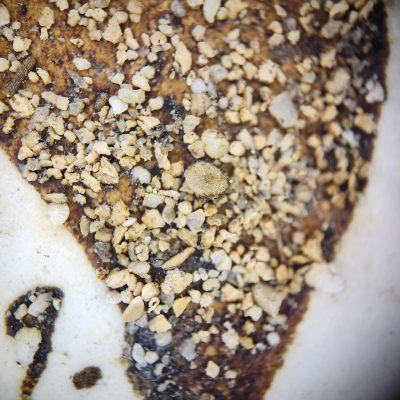
Fig. 4: Blotting sands under microscopy
Holding Four Centuries Together
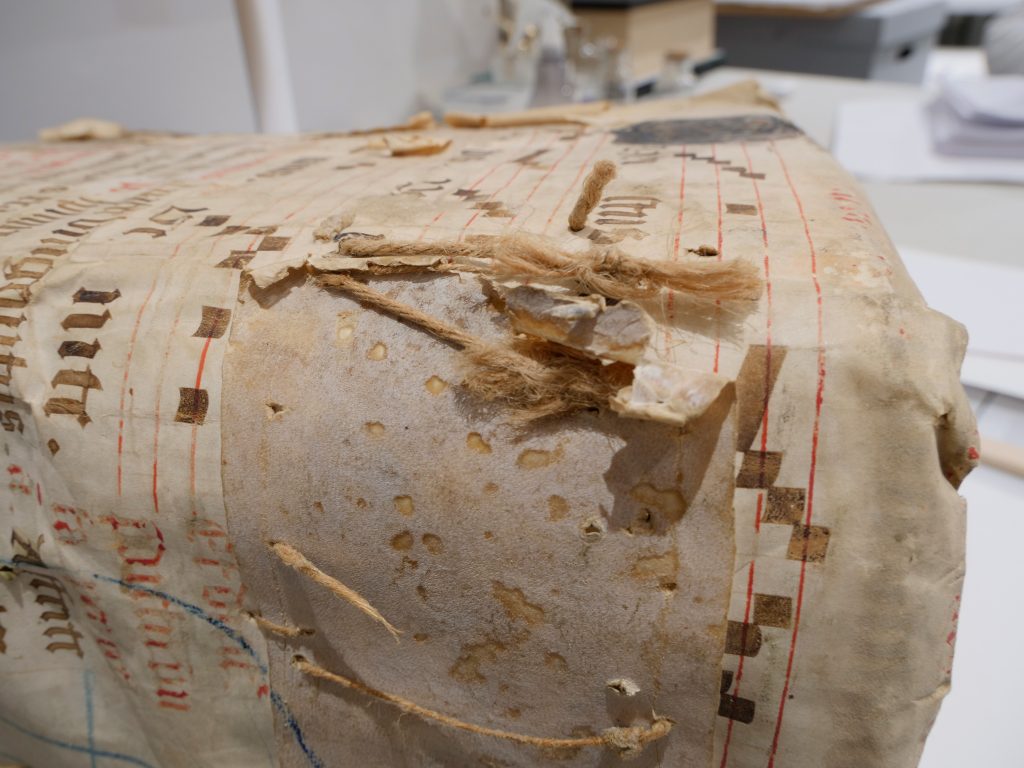
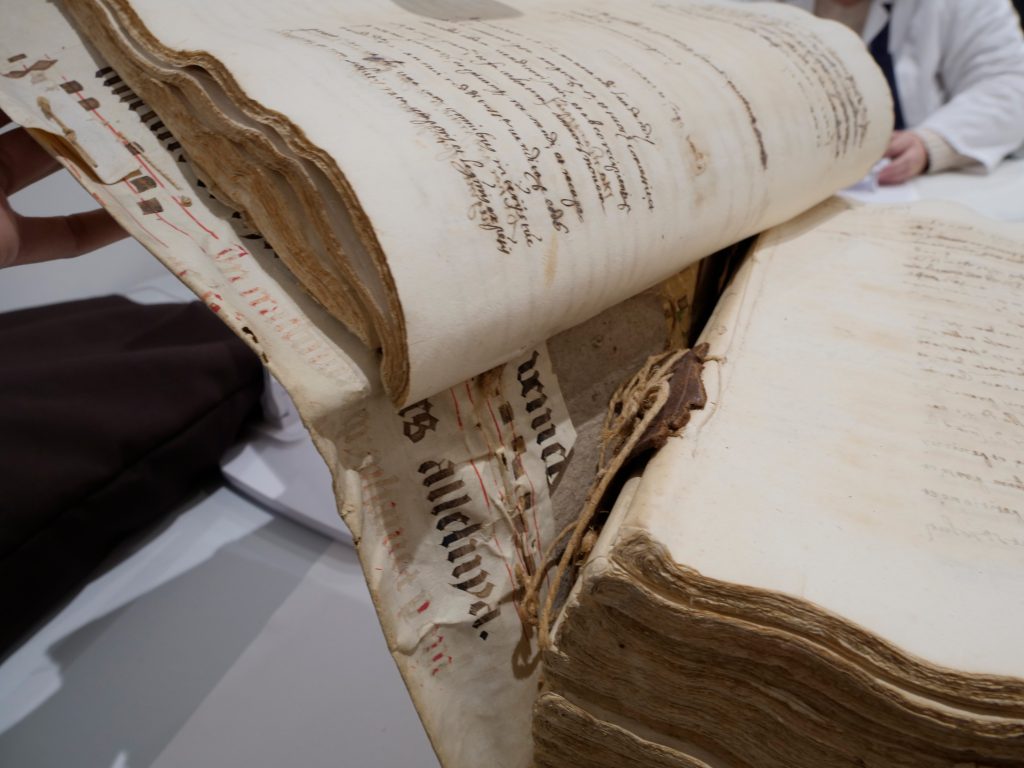
Fig. 5: Quires before treatment are attached directly to the cover, possibly because of the broken sewing support
Beneath the parchment cover lies a completely non-adhesive binding: the cover, boards and textblock are held together almost exclusively by sewing. After nearly four centuries of use, however, this structure had begun to fail.
One of the leather sewing supports had broken near the upper joint. During a past repair, the first two quires were attached directly to the cover, unintentionally placing additional strain on the spine. The parchment overbands had also become deformed, while around half of the cord tackets that secured the textblock to the cover had broken.
Treating the sewing required particularly careful planning, as every intervention would influence the way the book opened and how the first folios moved. Because the previous repairs had introduced strain into both the sewing structure and the parchment spine, the first step was to reverse the earlier intervention, a process referred to as de-restoration.[7] The repairs were removed, the leather sewing support was reconstituted, and the quires were reattached to it. This relieved the strain on the parchment while preserving the original structure of the binding.
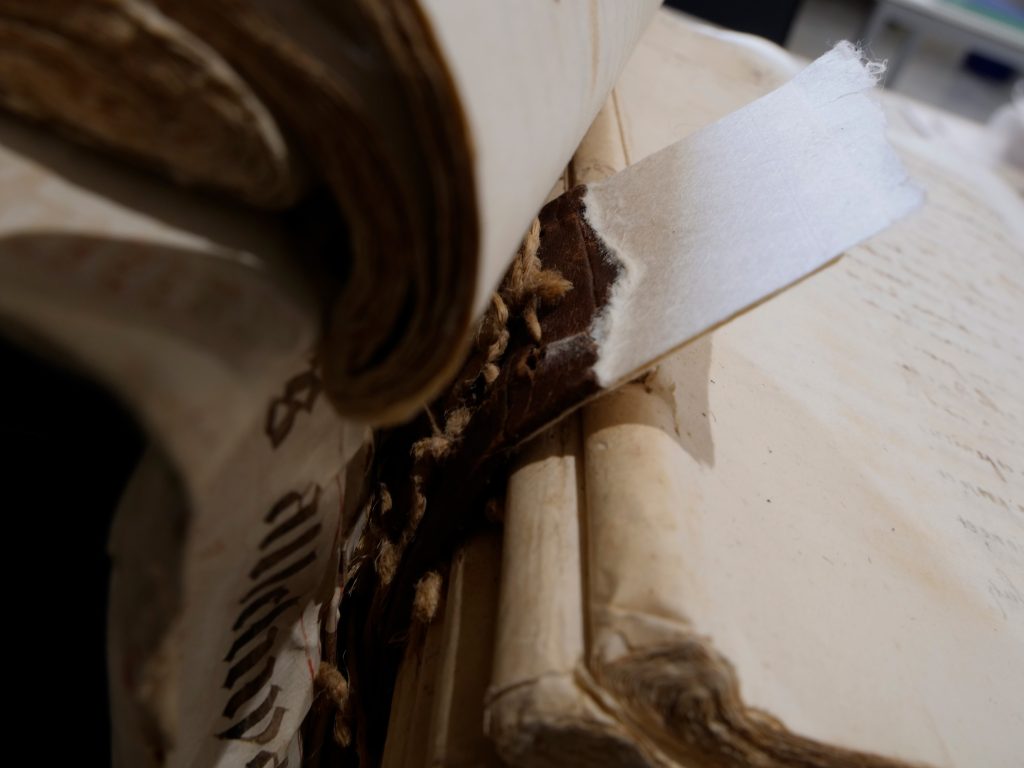
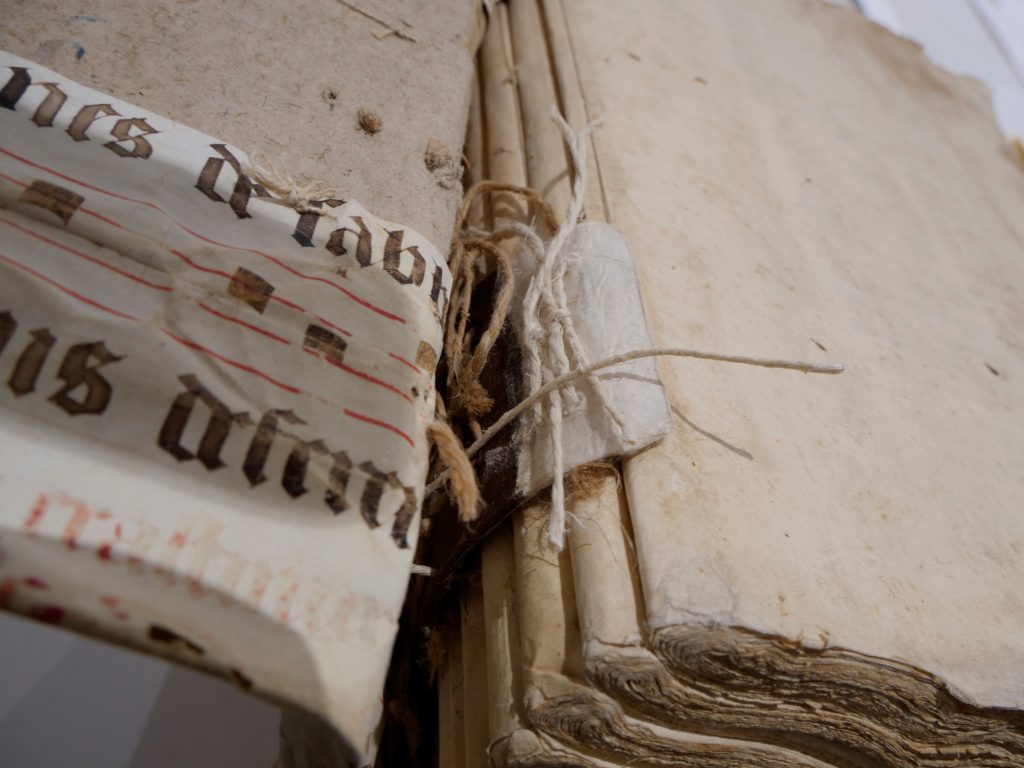
Fig. 6: The extension made of parchment and Japanese paper (left) and the quires reattached with linen thread (right)
Fig. 6: The extension made of parchment and Japanese paper (top) and the quires reattached with linen thread (bottom)
To reconnect the detached quires, an extension was created from thin parchment reinforced with layers of Japanese paper adhered with a mixture of wheat starch paste and EVA (cf. fig. 6).[8] The extension was carefully shaped to match the contour of the spine while remaining flexible enough to accommodate its natural movement.
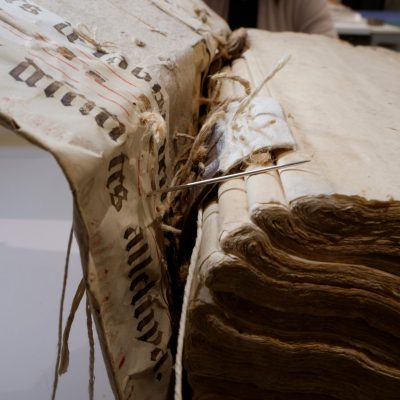
Fig. 7: Reattachment of the cover to the textblock
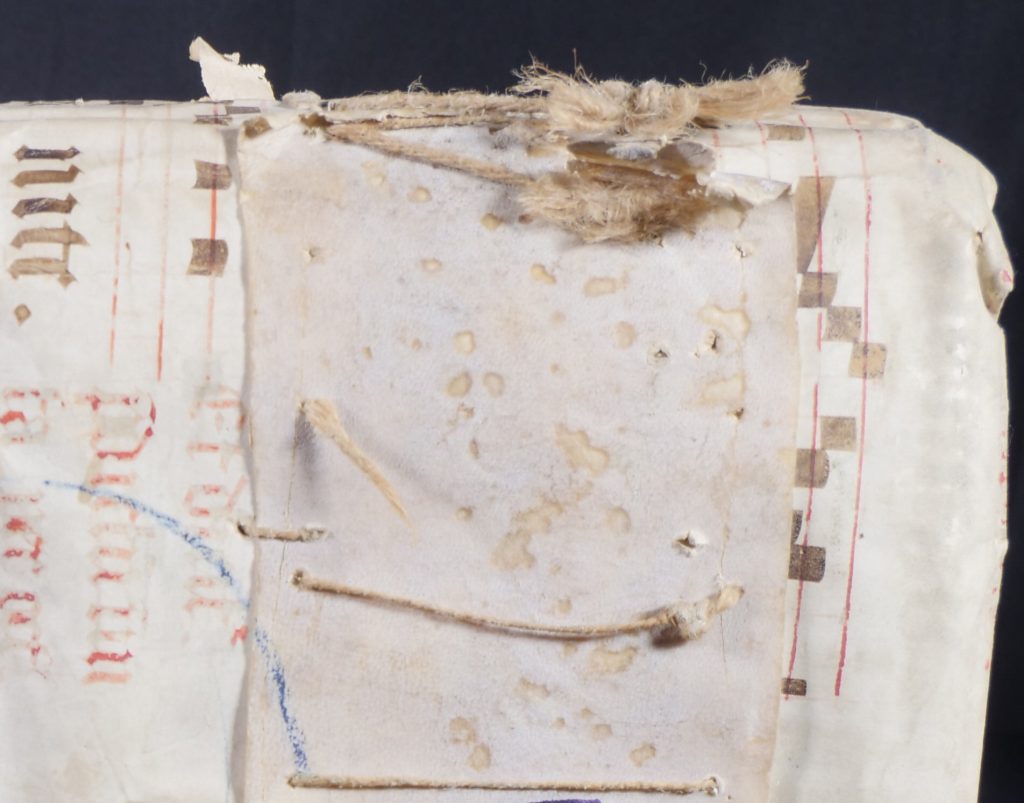
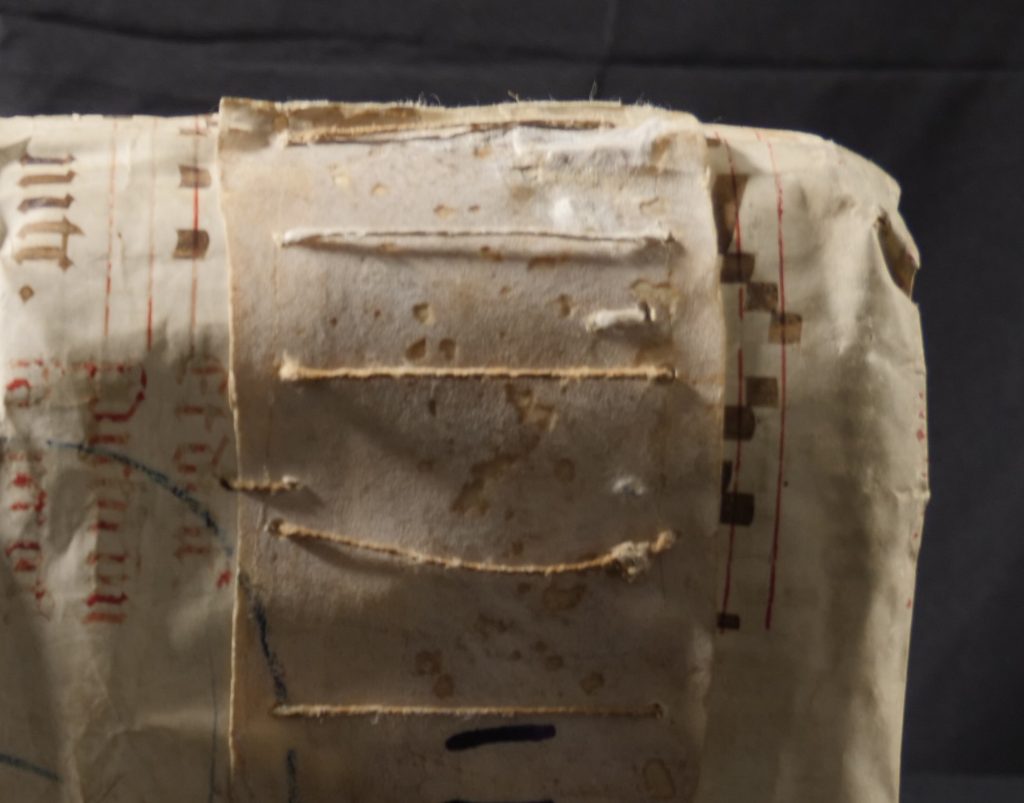
Fig. 8: Treatment of the overband and spine tackets
Preserving the Cover
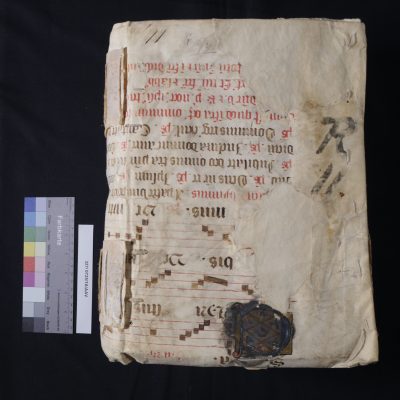
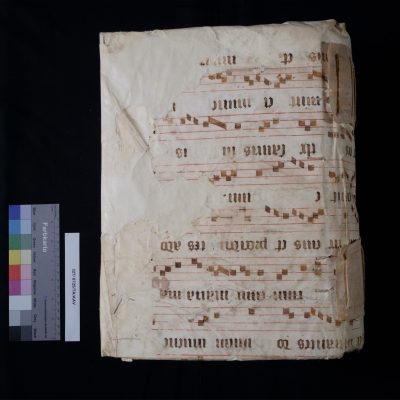
Fig. 9: Front cover (left) and back cover (right) after treatment
Fig. 9: Front cover (top) and back cover (bottom) after treatment
Large losses in the parchment cover (approximately 13 × 9 cm and 11 × 8 cm on the front cover, and 12 × 20 cm on the back cover) made the volume difficult to handle safely, particularly given its considerable size and weight. Some of this damage may have been caused by rodents.
The losses were infilled using 40 g/m² kozo paper, chosen because its thickness closely matched that of the original parchment. Before being applied, the paper was pre-toned with acrylics and burnished with a bone folder to recreate a surface texture that more closely resembled parchment (cf. fig. 9).
As an additional precaution, a custom Melinex wrapper was produced to protect the binding, particularly the fragile elements along the spine.
This conservation treatment offered a glimpse into parchment reuse in seventeenth-century Malta, particularly the practice of repurposing discarded musical folios into covers for notarial registers. In this case, the bifolio was even turned upside down so that the illuminated initial would appear prominently on the front cover, suggesting that aesthetic considerations were valued too.
Conservation as Discovery
Conserving a manuscript of this size and weight required balancing safe handling with the preservation of its historical evidence. Every intervention had to be carefully considered: enough to restore the binding’s function, yet restrained enough to preserve the original materials and construction techniques that make the volume historically significant. Perhaps one of the most remarkable aspects of this register is that its completely non-adhesive semi-limp binding has remained functional for almost four centuries without significant damage to its spine or joints. Its longevity demonstrates that historical binding structures were often remarkably effective and suggests that they still offer valuable lessons for modern conservation practice.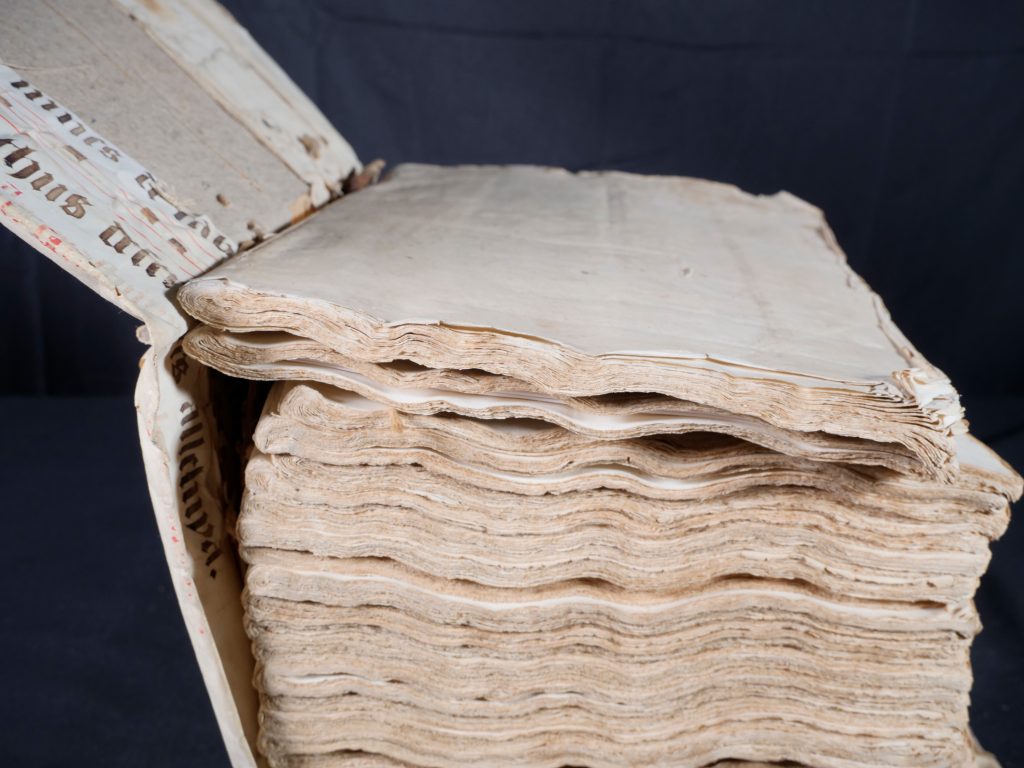
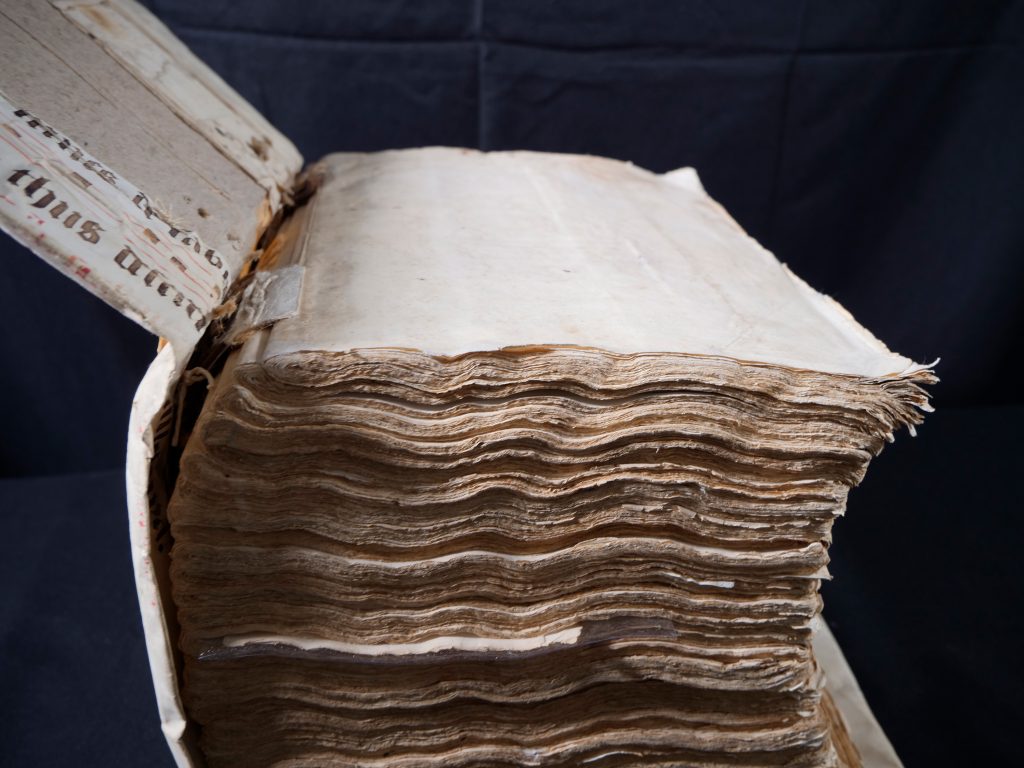
Fig. 10: Opening of the front cover before (top) and after treatment (bottom)
The treatment was carried out in February 2026 by Hoa Perriguey under the supervision of warranted Book & Paper Conservator, Chanelle Mifsud Briffa, Head of Conservation at the NAF. Learn more about our Conservation Department
Endnotes
- Joan Abela, ed., “A Recycled Cover,” in Salvate Nos: Saving the Notarial Archives (Malta: Notarial Archives, Office of the Notary to Government, 2020), 71–73.
↩ - Joan Abela, ed., “A Recycled Cover,” in Salvate Nos: Saving the Notarial Archives (Malta: Notarial Archives, Office of the Notary to Government, 2020), 71–73; Theresa Zammit Lupi, “Grand Master Lisle Adam’s Recycled Liturgical Manuscripts as Notarial Bindings,” in At Home in Art: Essays in Honour of Mario Buhagiar, ed. Charlene Vella (Valletta: Midsea Books, 2016), 221–234.
↩ - Nicholas Pickwoad, “The Use of Fragments of Medieval Manuscripts in the Construction and Covering of Bindings on Printed Books,” in Interpreting and Collecting Fragments of Medieval Books: Proceedings of the Seminar in the History of the Book to 1500, ed. Linda L. Brownrigg and Margaret M. Smith (Oxford: Red Gull Press, 1998), 1–20.
↩ - Jennifer Bain and Anna de Bakker, “Traces of Liturgy: Analysing Manuscript Fragments from the Binding of the Riesencodex,” Fragmentology 7 (2024): 9–51.
↩ - Birgit Reissland et al., “Blotting Sand on Writing Inks: An Underestimated Source of Information,” in Pre-Conference Proceedings (Extended Abstracts), 2nd Iron Gall Ink Meeting and Final European Thematic Framework Meeting for Transitional Metals in Paper (MIP), ed. Jana Kolar and Matija Strlič (Newcastle upon Tyne, UK: MIP, 2006), 31–32.
↩ - Rainer Milke, “Geomaterials in the Manuscript Archive: The Composition of Writing Sands and the Regional Distribution of Writing-Sand Types in Southwest Germany and Northern Switzerland, 14th to 19th Century,” European Journal of Mineralogy 24 (2012): 759–770. https://doi.org/10.1127/0935-1221/2012/0024-2207; Margarida Nunes et al., “Uncovering Blotting Sands on the Portuguese Inquisition Documents,” Journal of Cultural Heritage 61 (2023): 211–216. https://doi.org/10.1016/j.culher.2023.04.003; Margarida Nunes et al., “Multi-Analytical Characterisation of Blotting Sands on Documents from Religious Orders in Portugal (16th–19th Centuries),” Spectrochimica Acta Part A: Molecular and Biomolecular Spectroscopy 303 (2023): 123204. https://doi.org/10.1016/j.saa.2023.123204.
↩ - De-restoration is the process of reversing a previous restoration by removing modern additions or alterations from an object or structure. Its aim is to reveal the original core and recover a state that more closely reflects the object’s historical condition. In this case, the earlier sewing repairs had altered both the structure of the binding and the movement of the first folios. Their removal allowed the original sewing to be repaired while restoring the manuscript to a state that more closely reflected its original appearance and function.
↩ - Parchment is often used as a stay when extending broken sewing supports. In this case, however, Japanese paper replaced leather because the earlier repair secured only the quires and not the cover. This allowed the repair to match the thickness of the original support while adhering more readily to the parchment and accommodating the natural movement of the spine.
↩ - Katherine Beaty and Kelli Piotrowski, “From Florence to Rome: Conserving Italian Stationery Bindings at Harvard University,” in Care and Conservation of Manuscripts 18, ed. M. J. Driscoll (Copenhagen: Museum Tusculanum Press, 2023), 31–53.
↩