Careers in the Archive: Digital Archiving Technician
Careers in the Archive: Digital Archiving Technician
by Maureen Saguna & Marsha Iaci
When people think of archives, they often imagine silent rooms filled with dusty shelves and old papers. The reality is quite different. Historical archives like the Notarial Registers Archive (NRA) are more often than not dynamic places where history and technology converge. In this interview with Marsha Iaci, the Digital Archiving Technician at the NRA, we get a glimpse behind the scenes of digital archiving and why the role of the archivist is as relevant as ever.

What is an Archive?
As someone who spends her days in direct contact with the vast collection held by the NRA, Marsha feels that an archive is “a reflection of society, power, and the people or institutions behind it.” While they provide irreplaceable primary source material for historians and researchers, archives are also deeply emotional spaces, providing a tangible link to history and bringing it to life. There are many different kinds of archives, including government, corporate, family and even private ones, which together “form a rich, complex landscape that connects past, present, and future.”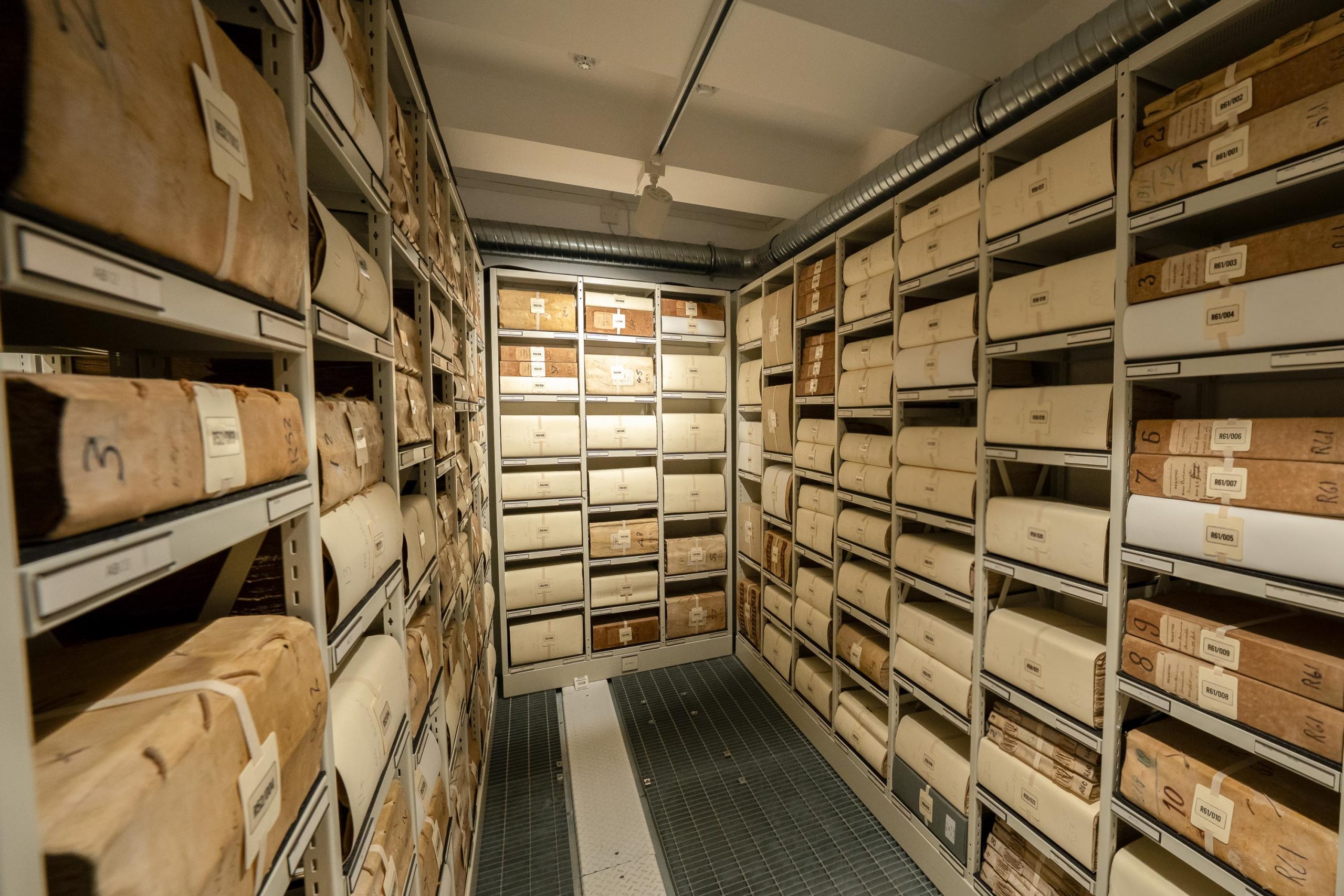
She adds that archives show how societies functioned and changed over time while revealing the priorities and perspectives of their creators. The choices made about what was to be preserved and what was to be left out reveal a lot about the people behind a collection. “This human dimension is essential: a single letter, photograph, or internal memo can tell stories about individuals, offices, or entire institutions,” she says.
What Does an Archivist Do?
At its core, archiving is about safeguarding cultural memory and ensuring that future generations can access a collection and connect with the past. A traditional archivist’s focus is the accessioning, organisation, and description of physical records, ensuring that they remain accessible and usable over time. Such actions can include cataloguing, digitisation, security, and digital backups, helping to prevent loss, decay, or corruption.
However, changes in archiving have led to the emergence of the digital archivist. While the principles of archival work remain largely the same, digital technologies have transformed how collections are managed, described, and accessed. Traditionally, archival description has followed hierarchical standards such as ISAD(G), where records are described in relation to their fonds, creators, functions, and provenance. Digital approaches build on these foundations by making relationships between people, places, institutions, and events more explicit, structured, and machine-readable. This permits collections to be searched, connected, and interpreted in new ways.
While the work of a digital archivist overlaps with that of traditional archivists, the role bridges the physical collection and the digital systems that make it discoverable and usable. As a digital archiving technician, Marsha’s job entails the organisation and, together with the conservation team, the preservation of the collection held at the NRA. However, although the preservation and organisation of a collection is a crucial function of archives, Marsha is keen to stress that this is only a fraction of the work that goes on at the NRA. In the case of archivists, as well as in her case, their job is a mix of research, interpretation, and what Marsha describes as “a kind of detective work”.
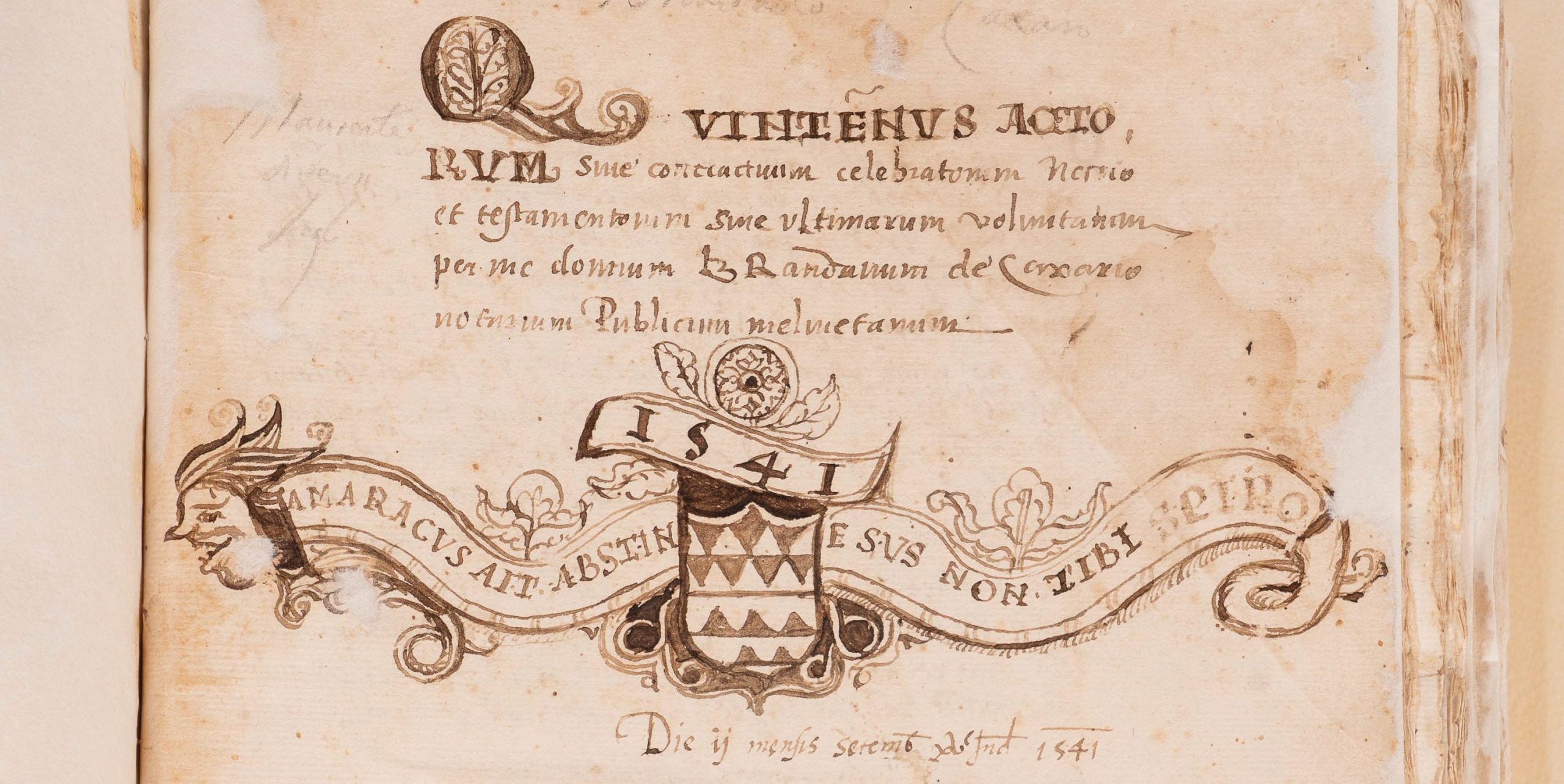
Every now and then, Marsha and her colleagues come across hidden gems among the centuries-old volumes at the archives. “One of the discoveries I’ll never forget was finding the long-lost index of Notary Lorenzo Agius,” recalls Marsha. “For years, it was believed to have disappeared completely, so it was a thrilling moment when I unexpectedly found it inside one of the volumes of another notary. It had been hiding in plain sight.” Indices are important tools for researchers, so restoring Agius’s ‘missing’ one filled a gap that had hitherto complicated their job. This kind of detective work is one of the things Marsha enjoys most in her job. “Sometimes I feel like Agatha Christie, piecing together mysteries from fragments of evidence and following the trail until the story reveals itself.”
Finding a Path into the Archives
Marsha’s journey into archiving began when she was in sixth form, while doing a Systems of Knowledge project at the National Archives of Malta in Rabat. “I remember walking into the archives for the first time and seeing how history could be experienced directly through documents,” she recalls. That school outing was to steer her towards a career in archiving, but it was meeting Dr Joan Abela that inspired her to pursue a Master’s Degree in Archives and Records Management. “She played a crucial role in showing me how to connect what I was studying with the world of archives,” she says. “Dr Abela helped me see that archives could provide links across disciplines, from history, language, and law, to culture and society.”
As she read for her master’s, Marsha started volunteering at three different archives around Malta, one of which was the Notarial Registers Archive, where she is now a full-time employee. “Volunteering provided me with hands-on experience which was invaluable, as it allowed me to apply what I was learning, to handle collections directly, and to see how different archives function,” she shares.
A Day in the Life of a Digital Archiving Technician
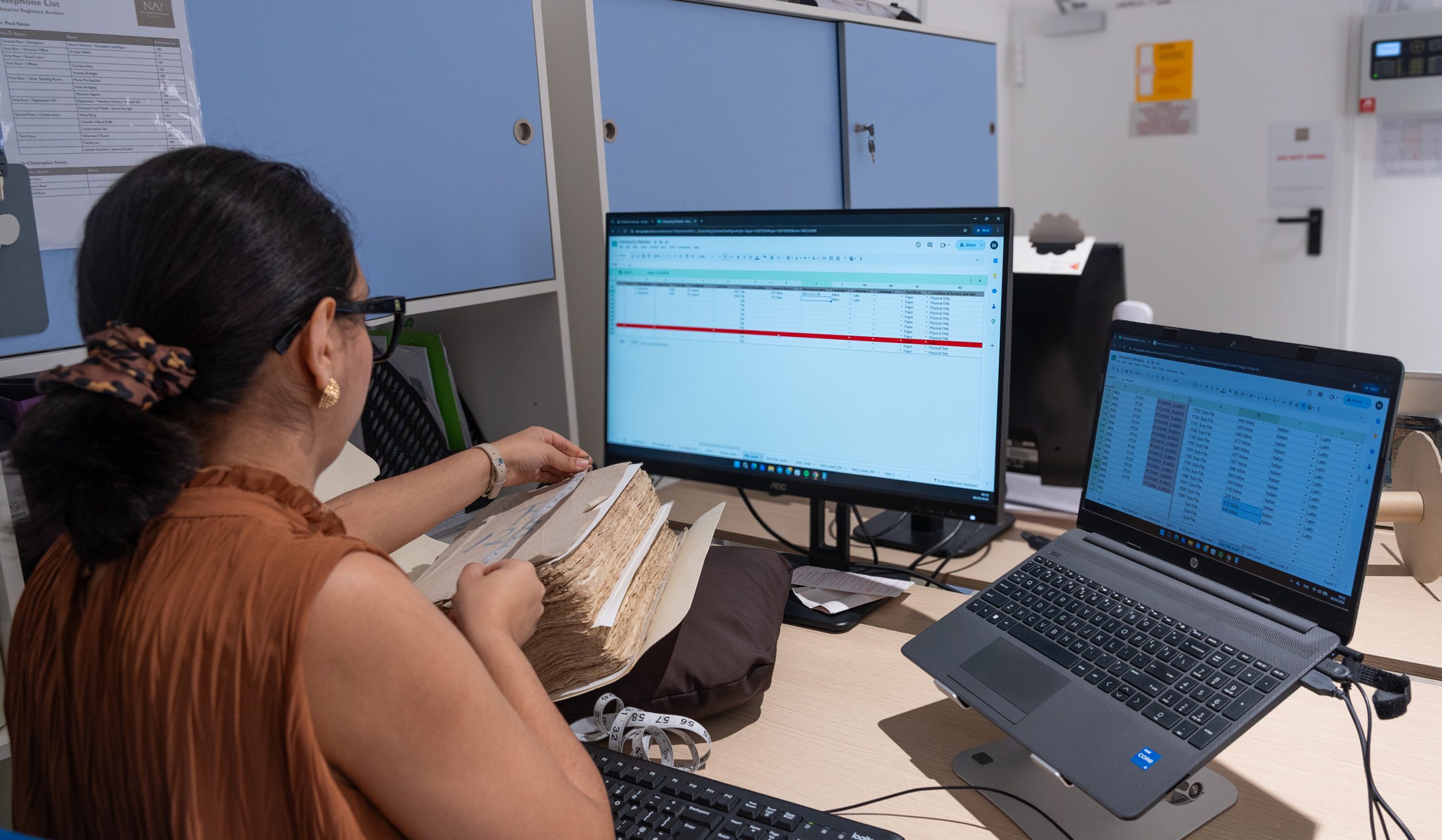
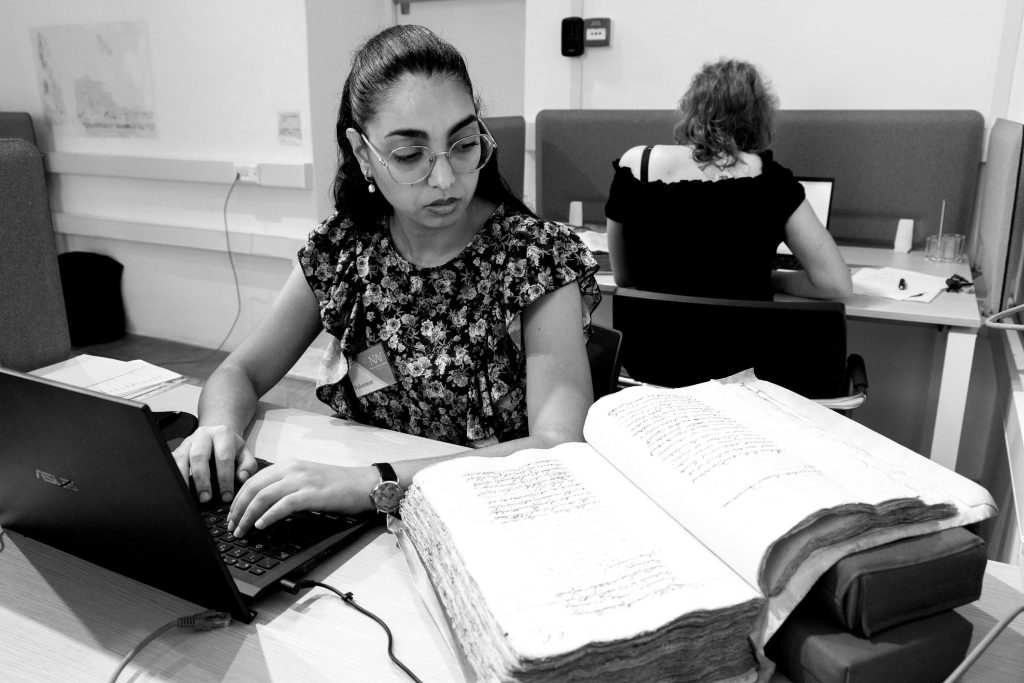
There is no such thing as a completely typical day in the archives. For a digital archiving technician, this work often involves moving between the physical and the digital worlds. A document may need to be checked and catalogued before digitisation, handled according to conservation guidance, reviewed for image quality, assigned metadata, and linked to the correct catalogue entry. Each step matters: a poorly named file, missing reference number, or unclear description can make a document difficult to find, even after it has been digitised. “Collaboration is constant,” Marsha states. “I work closely with conservators, our ICT specialists, and my other colleagues to ensure collections are preserved, digitised, and made accessible to researchers in a safe and meaningful way.”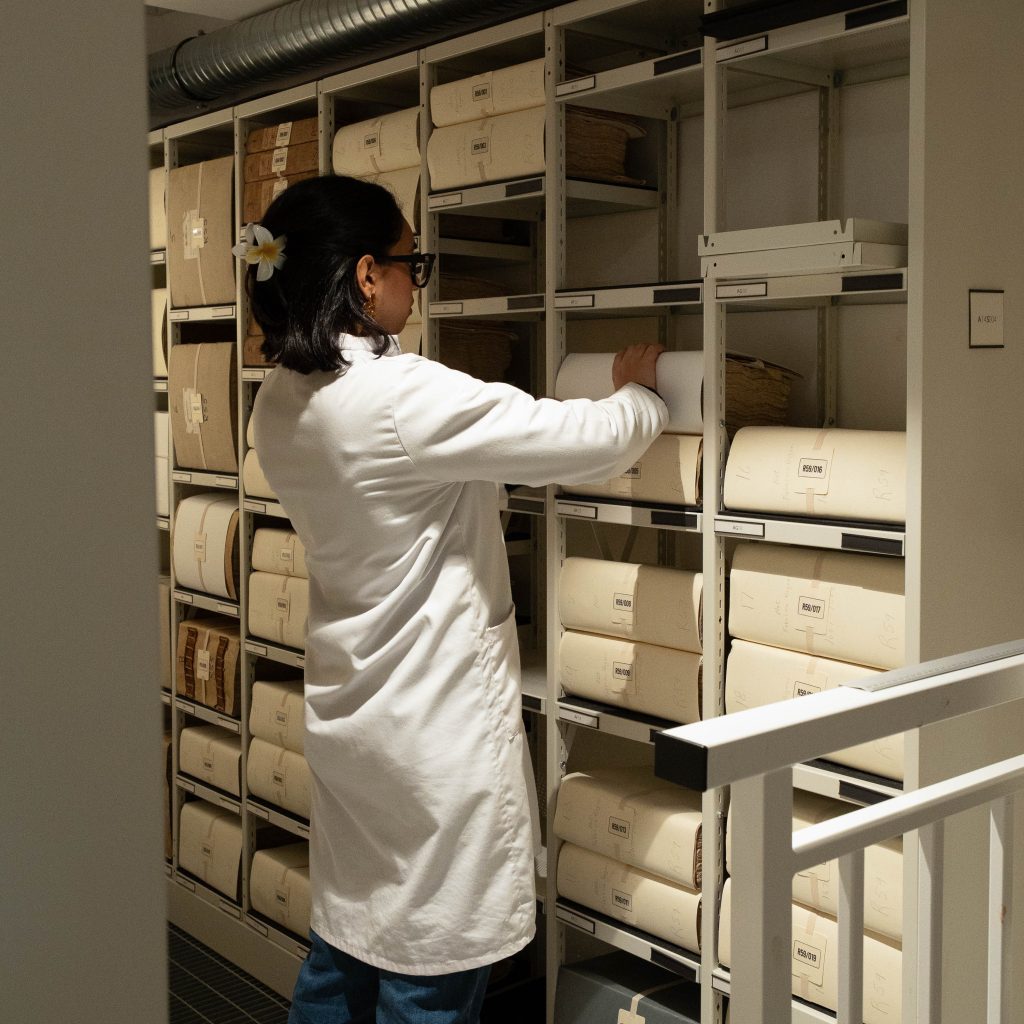
Challenging Common Misconceptions
One of the most common misconceptions about archival work is that it is solitary and simply involves storing old documents. In reality, archivists and digital archiving technicians are constantly analysing, interpreting, and connecting records, while collaborating with professionals across disciplines.
“Many don’t realise how much the role of the archivist has evolved,” Marsha points out. “Digital archives, international standards, and concerns about accessibility, inclusivity, and ethical stewardship mean that being an archivist today involves a combination of preservation, research, technological skills, and storytelling. It’s far more than shelving documents; it’s actively shaping how society understands and connects with its collective memory.”
Guidance for Those Considering a Career in Archiving
There are many ways to enter the archiving profession. In Marsha’s case, a background in Classics and Archaeology provided her with useful skills, but different first degrees can be equally helpful. For those who wish to progress as professional archivists, a Master’s degree in Archives and Records Management can be extremely valuable, as it provides training in archival standards, ethics, and international practice. “It provides the standards, ethics, and training that give your work recognition worldwide,” says Marsha. “If you enjoy thinking, questioning, and helping others discover knowledge, you’ll find it deeply rewarding.”Why This Work Matters
What Marsha loves most about her job is the sense of connection with the lived experience of people from centuries ago. “Above all, I love knowing that what I do helps preserve memory for future generations while keeping it accessible and meaningful today,” she adds.